 Supplier Nudge
Guide
Letter of guarantee in food safety: what it is and how to renew it
What a supplier letter of guarantee is in food safety, what a useful one says, how long to treat it as valid, and how to request and renew one.
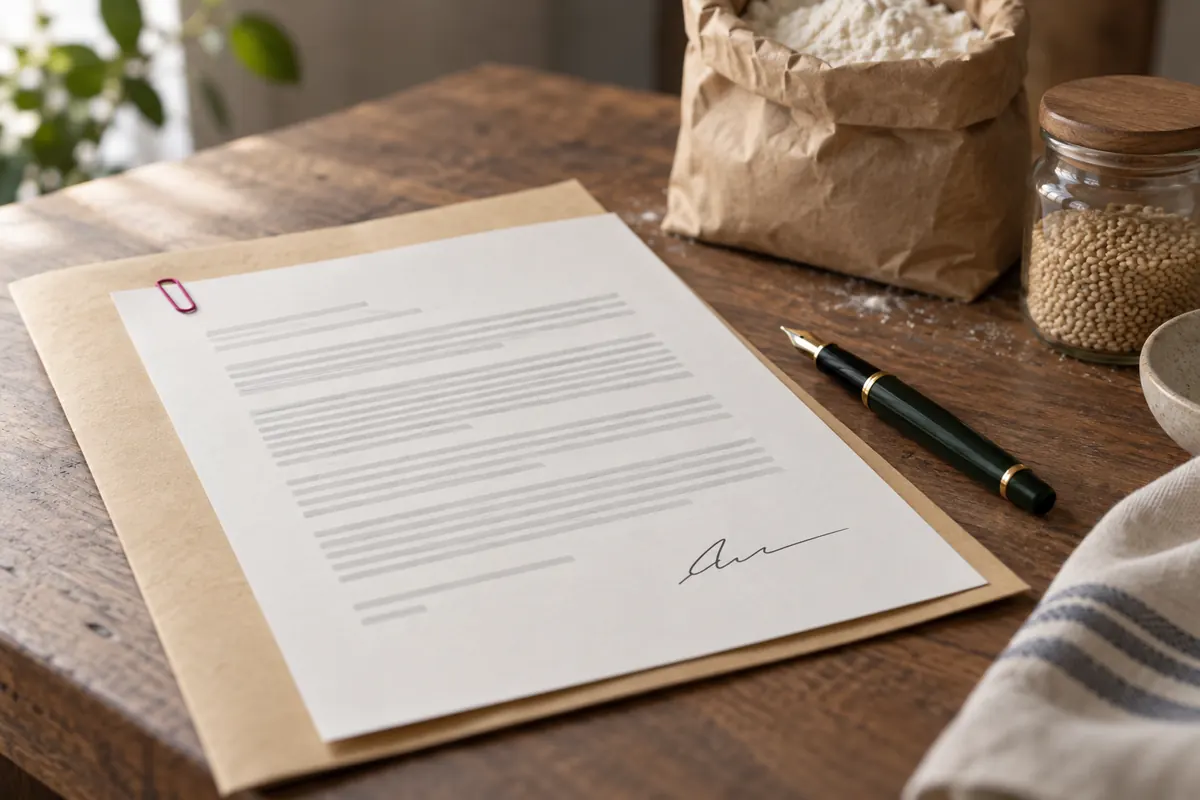
A letter of guarantee (often shortened to LOG) is a signed statement from a supplier that the products it sells you meet the requirements you name: that they are safe, legal and made the way the specification says. Food plants ask for one from nearly every supplier of ingredients and food-contact packaging, and auditors expect to find a current one in each supplier's file.
It is a short document, but it causes more audit trouble than its length suggests, mostly because it rarely prints an expiry date. This guide covers what a letter of guarantee is for, what a useful one says, how to treat its validity, and how to collect and renew them without a spreadsheet of reminders.
What it is, and what it is not
A letter of guarantee is the supplier's written promise. It sits alongside the evidence you collect yourself, such as a GFSI certificate, a specification sheet, an allergen statement and certificates of analysis, but it does not replace them. A certificate tells you an auditor looked at the supplier's site; the letter tells you what the supplier commits to for the products it ships to you.
You will see related names. Some suppliers call it a continuing guarantee, because it covers every shipment from its date onward rather than one lot. In US food law there is a related idea of a written guaranty under the Federal Food, Drug, and Cosmetic Act, and some letters are written with that in mind. What a letter means legally depends on its wording and your contracts, so if the legal effect matters to you, ask your own counsel. For food safety purposes, what matters is that your program says what the letter must cover and that you have a current one on file.
What a useful letter says
Many plants send suppliers their own template so every letter covers the same points. A useful letter of guarantee typically:
- names the supplier's legal entity and the site or sites that make the product;
- names the products it covers, or says it covers everything the supplier ships to you;
- states that the products are not adulterated or misbranded and comply with the applicable laws and regulations where you sell;
- confirms the products meet the specifications you agreed;
- for packaging, states the materials are suitable for food contact for the use you described;
- commits the supplier to tell you about changes to formula, process, site or allergen status;
- is signed and dated by someone with authority to sign for the supplier.
If you write your own template, keep it to what your program actually requires. A long letter that suppliers refuse to sign protects nothing.
How long is a letter of guarantee valid?
Most letters print no expiry date. Some say they continue until revoked; others say nothing at all. Your program, not the letter, should decide when you ask for a new one. Common choices:
- Every 12 months from the date it was signed. The most common choice, and easy to explain to an auditor.
- When something changes. A new formula, a new site, a change of ownership or a new product line should trigger a new letter regardless of the date.
- Every 24 months for low-risk materials, where your risk assessment supports it.
Whatever you choose, write it into your procedure and record a renewal date for every letter: the signing date plus your interval. An undated letter with no renewal date is the one that turns up three years old during an audit.
Requesting one: a short email that works
Suppliers answer short, specific requests faster than long ones. Something like:
Subject: Letter of guarantee needed from Valley Mills
Hello,
Riverside Foods keeps a current letter of guarantee on file for each approved supplier. Our records show yours was signed on December 2, 2025, and our program renews it every 12 months. Please sign and return the attached template, or send your own letter covering the same points, by November 15.
Thank you.
(The names and dates above are examples.) Include the date of the letter you have, the date you need the new one by, and your template. Reply-to should be a person, not a no-reply address: suppliers often answer with a question.
Keeping letters current across all your suppliers
The difficulty is volume. With 80 suppliers, a 12-month interval means roughly one or two letters coming due every week, each with no printed date to remind anyone.
A routine that holds up:
- Record the signing date and the renewal date for every letter when it arrives.
- Ask before the renewal date, not after. Sixty days ahead is a reasonable first request; follow up at 30, 14 and 7 days.
- Keep asking weekly after it lapses, and hand it to purchasing or pick up the phone after several unanswered reminders.
- Check the new letter before filing it: right supplier, right products, signed and dated.
- Keep the old letter. It shows you were covered for the earlier period.
Where Supplier Nudge fits
Supplier Nudge works out renewal dates for letters of guarantee, allergen statements and spec sheets from the intervals you set (12 months for letters of guarantee by default), and reads printed dates from certificates. Each supplier gets one upload link listing what is missing or expiring, and reminders go at 60, 30, 14 and 7 days before each renewal date, then weekly for up to eight weeks, until a current copy arrives. It collects and dates documents; deciding whether a letter meets your program stays with you.
Every supplier document current before your next audit, without chasing anyone yourself
Supplier Nudge sends each supplier one upload link listing what is missing, reads the expiry dates, and emails them at 60, 30, 14 and 7 days, then weekly for up to eight weeks after expiry.
$129/ month
Get startedCancel any time.