 Closeout Chase
Guide
Warranty letters in construction: what a sub's letter includes
What a subcontractor warranty letter in construction usually contains, how it differs from a manufacturer warranty, a template, and how to track end dates.
The installer's warranty letter is the closeout item subs most often forget. It feels like a formality: the sub already has a contract obligation to fix its defective work, so a one-page letter saying so seems redundant. But owners and their reviewers ask for it, the spec usually requires it, and a missing letter can hold up acceptance of the whole turnover package.
This guide explains what a construction warranty letter is, how it differs from the manufacturer's warranty for the same work, what one usually contains, and how to keep track of the dates once you have it. It is general information, not legal advice: the terms of a warranty come from your contract and spec, and an attorney should review anything unusual.
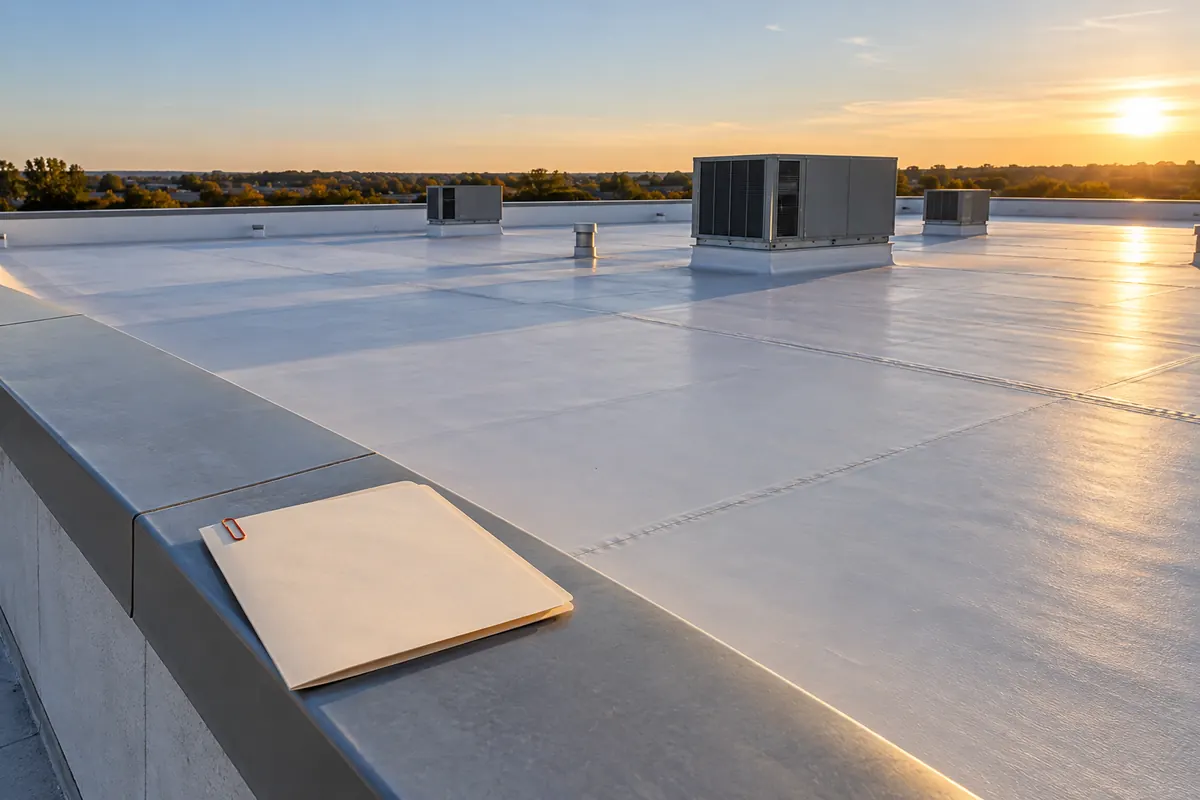
Two kinds of warranty for the same work
Many trades owe two separate documents:
- The manufacturer's warranty covers the product or system: a roof membrane, a storefront, a rooftop unit, a water heater. The manufacturer issues it, often on its own form, and some require an inspection by their own representative before they issue it. Its terms are the manufacturer's.
- The installer's warranty letter comes from the subcontractor and covers its own labor and workmanship: that the work was installed according to the contract documents and that the sub will correct defects in it for a stated period.
The two cover different failures. A leak caused by a defective membrane is the manufacturer's problem; a leak caused by a badly welded seam is the installer's. The owner wants both, and so do you, because your own correction obligation to the owner usually runs alongside the sub's.
What the letter usually contains
The spec's warranty article often prescribes the content, and some specs include a required form. When they do not, a typical installer's warranty letter includes:
- The sub's letterhead with its legal name, address and contact person.
- Who it is addressed to. Usually the owner, sometimes the general contractor, as the spec requires.
- The project. Name, address and project number.
- The scope. What work is covered, often by specification section, for example "roofing and sheet metal flashing, section 07 54 00".
- The start date. Often the date of substantial completion, sometimes the date of acceptance. Say which, and give the date.
- The term. The length of the warranty, such as one or two years, as the spec requires.
- The promise. That the work was performed according to the contract documents, and that the sub will repair or replace defective work during the term at no cost to the owner.
- Exclusions, if any are allowed: damage from abuse, alteration by others, or causes outside the sub's work.
- How to make a claim. Who to call and how quickly the sub will respond.
- A signature by an officer or authorized person, with the date.
A template to start from
Adjust it to your spec's language, and use the spec's own form when there is one.
[Subcontractor letterhead]

[Date]

To: [Owner name], [Owner address]
Re: [Project name], [Project address], Project No. [number]
    Installer's warranty: [scope], Section [spec section]

[Subcontractor legal name] warrants that the [scope] work it performed
on the project above was installed in accordance with the contract
documents, and that it will repair or replace, at no cost to the owner,
any of that work found to be defective in materials or workmanship
during the warranty period.

Warranty period: [term, e.g. two (2) years] beginning [start date],
the date of [substantial completion / acceptance].

This warranty does not cover damage caused by [exclusions allowed by
the contract documents, if any].

To report a warranty issue, contact [name, phone, email]. We will
respond within [time stated in the specifications].

[Signature]
[Name, title]
[Subcontractor legal name]
Common problems
- No dates. "Two years from completion" with no date makes the end date a matter of argument later. Ask for the actual start date.
- The wrong start. The letter starts the warranty at the sub's own completion date, while the spec says substantial completion of the project. Check which applies.
- Too short. The letter gives one year where the spec requires two.
- Wrong project or scope. A letter reused from another job with the old project name left in.
- Unsigned, or signed by someone without authority. A letter signed by a field office manager may not be what the owner's reviewer accepts.
- Limits the spec does not allow, such as excluding the very conditions the spec says the warranty must cover.
When a letter has one of these problems, send it back with a note naming the problem. A specific note gets a corrected letter faster than "please resend".
Tracking the end dates
A warranty is only useful if someone notices a problem while it still applies. For each warranty, manufacturer's and installer's alike, record:
| Field | Example |
|---|---|
| Trade and sub | Roofing, Summit Roofing (example) |
| Type | Installer's workmanship |
| Covers | Roofing and sheet metal flashing |
| Start date | Date of substantial completion |
| Term | 24 months |
| End date | Start date plus term |
| Source | Read from the letter, or entered by you |
If a warranty starts at substantial completion and that date moves, every end date derived from it moves too. Keep that link rather than typing the dates in by hand. Then set a reminder a month or two before each end date, so the building gets one last look while it is still covered.
For the rest of what subs owe at turnover, see our guide to construction closeout documents.
Where Closeout Chase fits
Closeout Chase puts the installer's warranty and the manufacturer's warranty on each trade's checklist as separate items, so neither is forgotten. Each sub uploads them through its own link, with no login. Warranties sent as PDFs or photos up to 10 MB are read for the manufacturer, start date, term and end date, and a warranty that starts at substantial completion takes the project's date. The warranty register shows each warranty's dates and whether each was read from the document, defaulted from substantial completion, or entered by you, and it goes into the turnover package as a CSV.
It does not judge whether a warranty's terms meet your spec. You review each one before it goes to the owner.
Get every sub's closeout documents in, so retainage gets released
Closeout Chase sends each subcontractor one link listing the warranties, O&M manuals and as-builts it still owes, reminds them until every item is in or tells you which ones to call, and builds the turnover package.
$99/ month
Get startedCancel any time.